

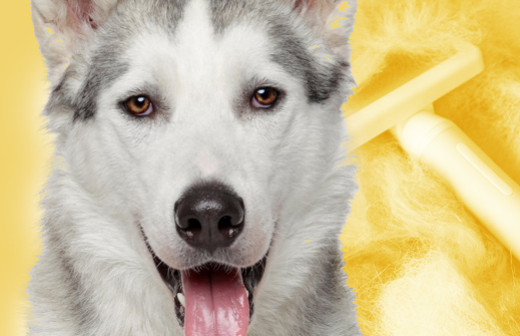
Dogs that shed their hair habitually and frequently.
Dogs shed. As all dog owners know, our four-legged friends leave a cloud of hair in their wake, more or less important. A natural phenomenon that occurs at specific times, and differs depending on the breed and where the animal lives.
Recognising abnormal hair loss
While shedding can be very impressive, especially in double-coated dogs such as Shiba Inu, it should not be confused with unusual hair loss, a sign of a disorder or disease. If your dog suddenly begins to shed heavily when it has never happened before, it is best to schedule a visit to the vet to establish the cause.
Why does the dog shed?
Dogs renew their hair. Whether it's to remove damaged fur or to make a natural cover for winter, it's a matter of physiology! Depending on the breed, a dog will shed a little or a lot of its coat. Double-coated dogs (Husky, Akita Inu, Labradors...) have an undercoat that renews itself according to the seasons: it allows them to keep cool in summer, and protects them from the cold in winter!
Moulting in the Shiba, Husky and Akita
Double-coated dogs are those whose moult is the most impressive. Many owners share photos on social networks of a "second dog" made entirely of hair recovered after brushing. The reason for this is that the coat of these dogs adapts to the seasons and must be renewed to prepare them for the heat or the cold. In them, moulting will be more important in spring and autumn, it can last up to 4 weeks!
Molting in flats
Dogs that live in flats have a different moult than those with permanent access to the outdoors. Exposed to the weather in small doses, during walks, their hair does not observe the biannual shedding of their fellow dogs. Instead, they will tend to moult less, but throughout the year.
The moult of a dog in a house
Have you recently moved from a flat to a house, and feel like your dog is shedding three times as much as before? This is normal! Your dog has adapted to his new environment by being outside more often. His shedding will be much more impressive - sometimes to the point of thinking it will never stop - but also more established over time.
What to do when my dog is moulting?
We love our animals. But their hair, it must be said, can drive us crazy! To avoid undergoing moulting, it is better to anticipate, and adopt the right gestures so that your dog is also at ease during this period.
Keeping your dog well hydrated
Moulting requires a lot of energy from your dog, and it tends to dry him out. Remember to fill his water bowl several times a day, and to check that it is always full. You can also opt for a water dispenser, which is particularly useful if you are away a lot leaving your dog home alone.
Think about food supplements
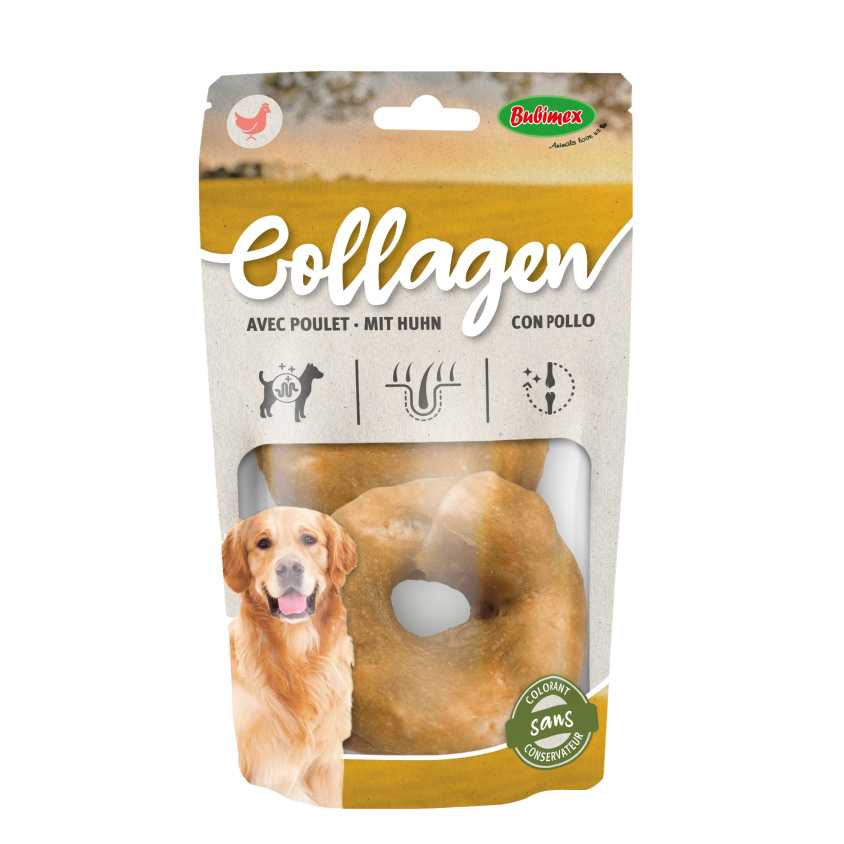
Some dog food supplements can strengthen your dog's coat. Without preventing shedding or drastically reducing hair loss, they will strengthen his coat to prevent the hair from breaking too easily. This is the case with salmon oil, cod liver oil, sardine oil and hemp oil. Dog probiotics have also been shown to be effective in boosting the immune system of moulting pooches.
Brushing and grooming
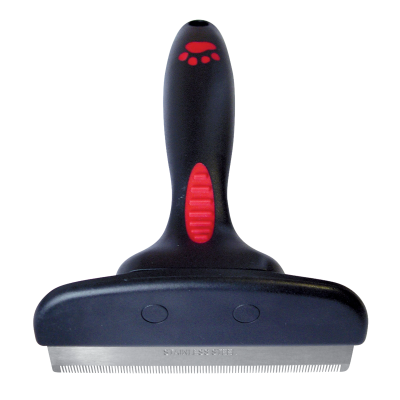
Your number one ally during moulting season will of course be the dog brush! Remember to choose a brush that is adapted to your companion's hair to avoid damaging its coat, and brush it daily during moulting. This will prevent hair from falling all over your home or getting caught on your dog's fur! In the middle of the moult, a good bath or a visit to the groomer will remove the excess hair and give your pet some relief.
Which shampoo for my shedding dog?
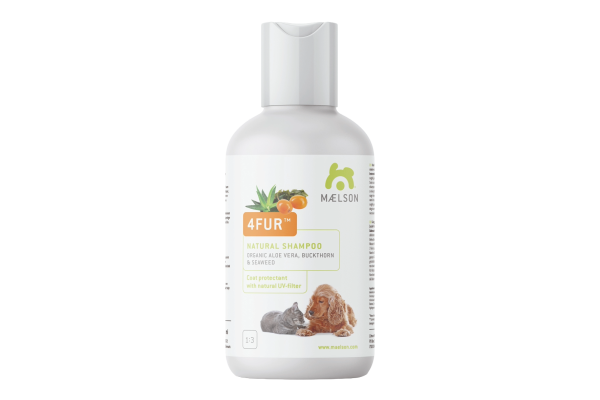
It is essential to choose a dog shampoo that is tailored to the specifics of your pet. If you take him to a groomer, he will ask you if your dog has skin problems, and select a range that is suitable for his coat. For an animal with sensitive skin, prefer a hypoallergenic or dermatological shampoo.
Balms and care
Moulting is a trial for your dog's coat. This is the opportunity to take advantage of it to pamper it as much as possible. Don't hesitate to apply a dog conditioner, detangling gloss or shine-revealing spray to nourish his scalp. Bio Groom's Anti Stat Hair Control range has been specially designed to control hair loss and revive the coat.
Should you shear your dog?
Dog clipping should not be taken lightly, it can have devastating consequences on our pets. Double-coated dogs, mentioned above, should only be shaved if absolutely necessary. Removing their coat also removes their protection from the sun or frost, and exposes them to many dangers. On the other hand, dogs with long, fine hair that tends to mat, such as Westies or Yorkies, can benefit from recurrent shearing. A dog with badly damaged skin, or one that is infested with parasites, may also be shaved to promote healing. If in doubt, always ask your vet or groomer for advice!