







Pregnant women and cats: myths and realities
Cats and toxoplasmosis
It is often said that a pregnant woman should not be around cats during her pregnancy. The reason is called toxoplasmosis, a parasitic infection that can harm the foetus. Our felines are the definitive hosts of the parasite (Toxoplasma gondii by its small name), which will settle in their bodies. Eggs will then be found in their faeces.
How does a cat get toxoplasmosis?
Cats are singled out, but in reality it is soil, meat and dirty water that are full of cysts containing the parasite. For a cat to get toxoplasmosis, it must have ingested one of these items, or feces from another carrier cat.
Can a cat with toxoplasmosis be treated?
It is difficult to confirm the diagnosis with certainty, but if your cat shows the symptoms of toxoplasmosis (respiratory or digestive problems, loss of appetite, fever, etc.) an antibiotic treatment can be prescribed by the vet. Your cat will then be completely healthy and free of the parasite and its infection.
Transmission of toxoplasmosis
Contrary to popular belief, cats do not transmit toxoplasmosis for sure. A pregnant woman will not catch the infection by stroking a small feline, nor by allowing it to give her little nudges with its tongue, nor even by being scratched inadvertently! It is the eggs in the cat's faeces that are contagious... if you ingest them. The risk is therefore much lower than we think, even if certain precautions must be observed.
I am pregnant and I have a cat, what should I do?
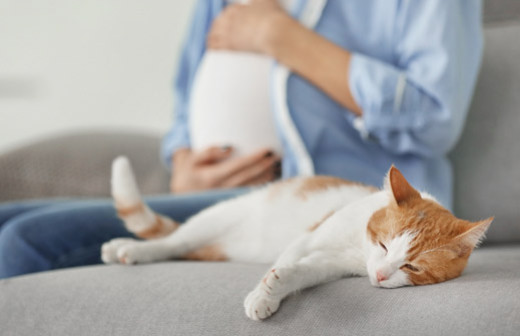
Myths about cats and toxoplasmosis have been and still are destructive for many felines. Uninformed, often on the recommendation of their doctor, many pregnant women make the terrible decision to reluctantly part with their little companion. Please note that there is absolutely no need to abandon your cat if you are expecting a baby and are not immune to toxoplasmosis!
My cat lives in a flat
If your pet is a flat cat that never leaves the house, the chances of it being a carrier of toxoplasmosis are almost zero. And if he has never eaten meat or hunted mice or birds, the chances of him harbouring the parasite are extremely close to zero. As a precautionary measure, and to really eliminate any possibility of contamination, simply avoid changing her litter box during your pregnancy.
My cat is used to hunting
Does your cat spend his evenings outside, and very often brings back small rodents as an offering to his owners? It is possible that he is a carrier of toxoplasmosis. Will you have to part with him? Absolutely not. Only ingestion of eggs in his faeces can contaminate you. If you used to change his litter box, you will have to pass the torch to another member of your household. The risk is minimal, but it is possible to inadvertently come into contact with the parasite at this time. If you have to do this, you can do it wearing rubber gloves.
Preventing toxoplasmosis in cats
If you are not yet pregnant but are planning to become pregnant, or if you have adopted a cat during your pregnancy, there are simple steps you can take to prevent your feline from becoming infected.
Don't give your cat raw meat
Raw meat is actually the number one risk of transmitting toxoplasmosis. Pregnant women should avoid eating it... and giving it to their pets! There is still time to switch to a BARF diet after the birth, if you wish. For the time being, choose dry cat food, which will protect your pet's body from possible infestation.
Deworming your pet
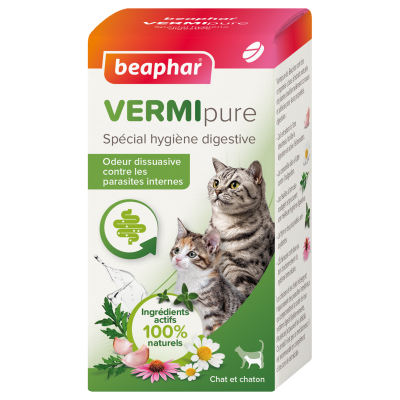
To avoid internal parasites, including those responsible for toxoplasmosis, remember to deworm your cat at each change of season. There are natural products that respect their fragile balance and will enable you to protect them.
Clean your cat's litter box from top to bottom
The person in charge of your cat's litter box (preferably not you!) can carry out a thorough washing every week. By washing the box with hot water, maximum hygiene is maintained and any traces of eggs are destroyed.
Wash your hands regularly
This is a basic gesture that helps to avoid any contamination... whatever the disease in question! If you are afraid of contracting toxoplasmosis despite all your precautions, remember to wash your hands throughout the day, a simple and effective way to avoid the risk of ingesting bacteria.
Where does the myth about cats and toxoplasmosis come from?
Most of the misconceptions about toxoplasmosis are due to a lack of information. When it was defined that the cat was the only known final host of Toxoplasma gondii, the conflation was quickly made. For many, this meant "cat = danger". Many doctors are primarily concerned with protecting pregnant women at all costs, and for them, eliminating even an extremely small risk justifies the stigmatisation of cats. However, more and more vets are speaking out in defence of the little felines who are wrongly accused of endangering the babies that will be born in their homes.
Limit the stress, keep your cat
As you will have understood, your cat is not dangerous either for you or for your baby. Contamination is possible, but it is much more likely if you eat unwashed vegetables or raw meat yourself. On the other hand, it can be traumatic to part with an animal that you have loved and shared your life for many years. Stress at this level can also lead to complications in your pregnancy. To keep everyone safe, keep your cat, and enjoy its cuddles and soothing purr!