



Harness or collar for dogs: what are the differences?
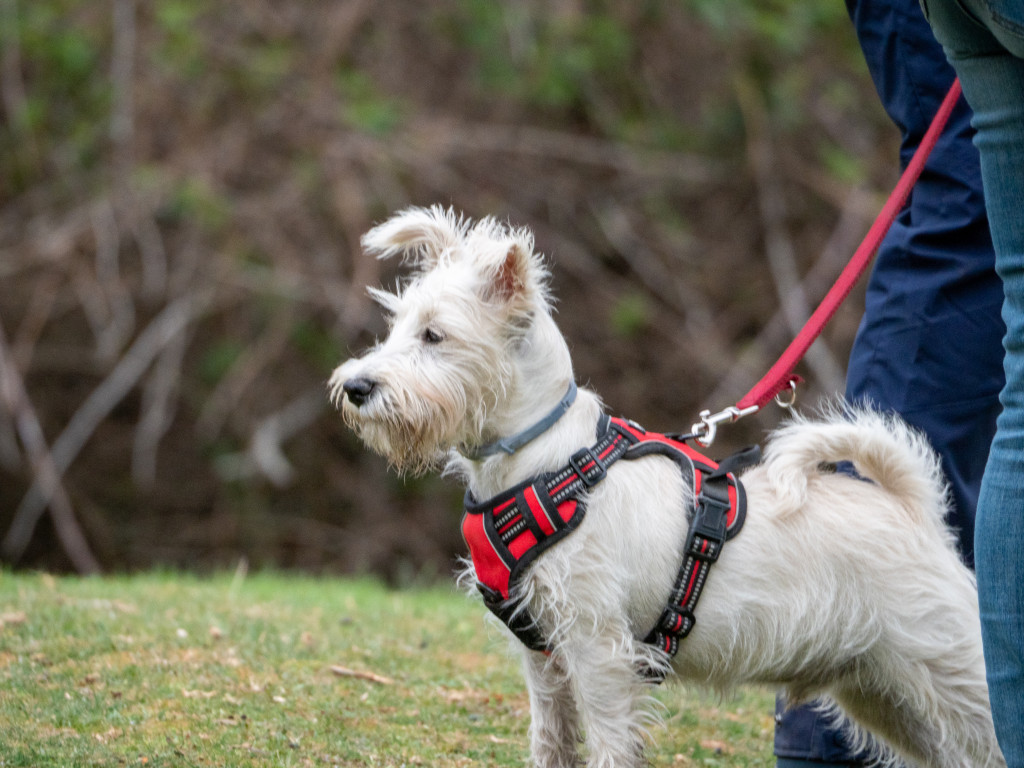
Generally speaking, we often advise waiting until the end of a dog's growth before opting for a harness. Since the puppy's bones and muscles are not yet formed, certain types of harnesses, such as T-harnesses, can hinder their development. However, there are models that are completely safe for a young dog: Y or H-shaped harnesses! Harnesses are ideal for walking on a leash, where they avoid pulling too hard on the sensitive parts of the dog's neck and throat. The collar is preferred when the dog is walking "loose" as a pet carrier.
Types of harnesses: Y, H or To
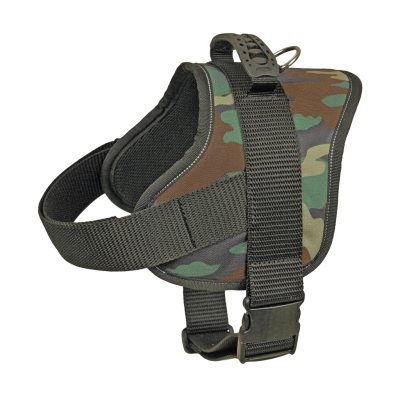
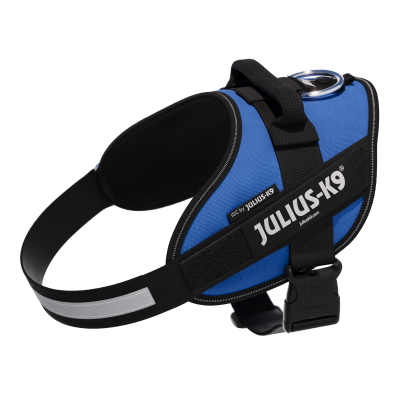
The different types of dog harnesses are categorized by their shape. The T-harness, made popular by the Julius K9 brand, for example, features a wide band of fabric across the dog's back, complete with two fasteners: one on the belly, and one on the chest, across both shoulders. The Y-harness, emblematic of the Ruffwear brand, follows the dog's morphology thanks to a support that is made on the chest, between the shoulders, a bit like a vest. The H-harness applies the same principle, but will generally be thinner, with different attachment systems.
Which harness to use for canicross?
Canicrossing requires the right equipment to avoid the risk of injury. Harnesses, belts, but also canicross harnesses are part of the essentials to buy. These harnesses are specially designed for pulling and can be recognized by their elongated shape. Dog racing harn esses are put on by the head and cover the whole body. They should end at the base of the tail, where the shock absorbing canicross leash is attached. The same harness should be used for canoeing and mountain biking.
Pulling harness and training harness
In the case of a dog that pulls a lot on its leash, it may be advisable to use an anti-pull harness or atraining harness such as the Easy Walk harness. This type of harness has an attachment for the leash on the front, not on the back. This system prevents the dog from pulling without hurting him, as walking simply becomes uncomfortable when he sets too fast a pace. Anti-pull harnesses allow your dog to stay within the length of the leash, and regulate his gait in a way that is comfortable for you and him.