Why does my dog jump on people?
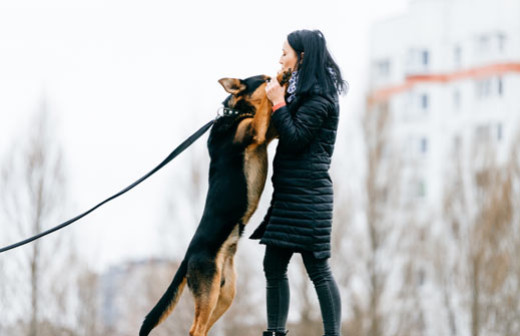
You've tried everything else, but your sweet dog keeps trying to climb on every visitor who comes through your door or who he meets on a walk? No, he's not trying to "dominate" them or impose a power struggle. You are just the proud owner of a very sociable and affectionate animal... sometimes a little too much so. A dog that jumps up often has the simplest intention: it wants to rub its nose on the human's nose, to say "hello" to them a bit like it would do with another dog, putting its face very close to theirs! This is a good attitude, but it can quickly become problematic. An elderly person or a child who is likely to fall under its weight, someone who is afraid of dogs being scared, or simply guests who don't really want to be climbed by a more or less big dog.
Teaching my dog not to jump
This is one of the most difficult things to learn, but it is far from impossible! Your dog is very excited at the idea of seeing you or meeting new people, his emotions are running wild, and he only wants to get down to your level to prove his love. To change his behaviour, several solutions can be put in place.
Understanding his intention
In dog training, it is essential to understand how your pet thinks and reacts so that you can adapt its behaviour to your daily life. As we have seen, a dog that jumps on people is very often looking for contact and closeness. But there may also be another reason! Did he smell food on you? Do you have a habit of raising your arms, which he interprets as a play call? Make sure you understand your dog's signals before you try to correct his behaviour.
Don't yell
A human's first instinct when faced with a pet that is not acting properly is to reprimand it. Unfortunately, if your dog is looking for a reaction from you... you are giving him exactly what he wants! The situation can escalate as your dog becomes more and more pushy and you become more and more angry.
Stay calm and still
On the other hand, it is best to refrain from raising your voice or making sudden gestures. Dogs interpret non-verbal language much better than they do your words: if you try to train him by gesticulating, he will be too focused on your movements to listen to what you are saying! By freezing your gestures and your voice, you are sending him a clear message: I am not responding to your requests, you must listen to me to know what I want from you. Your dog will then be much more willing to respond to you, and much more likely to stop jumping up to hear what you have to offer!
Offer him an alternative
You don't have to completely ignore your dog or deny him your attention to get him to stop jumping. In fact, there is a much more effective alternative. Once he listens to you, offer your furry friend an alternative way to satisfy his need for affection. Asking him to lie down or roll onto his back is a great way to change his attitude. Once he's on the ground, it's time to cover him with petting and scratching! Over time, by repeating the process, your pet will realise that he is not getting anything from you by jumping, but that you are giving him what he wants when he lies down. He will gradually give up jumping and lie down on his own.
My dog jumps outside
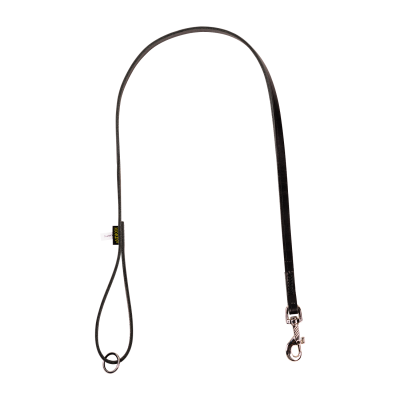
When walking, the situation is different. Your little friend will meet strangers, children and people who do not want to be jumped on by an animal they do not know. It's important to teach your dog to recall early on, so that he can return to you without delay. It is up to you to keep a close eye on your dog and act quickly if you see him approaching someone he doesn't know. If your dog does not listen, it is best to tie him up when you meet other walkers. To give your dog some freedom, you may want to use a dog tether, which will allow him to roam around but will give you a way to contain him if he decides to jump on other people.
My dog jumps on my guests
Your visitors may not have the patience to start a dog training programme to stop your dog jumping on them. Don't panic, you can still have your friends and family over, as long as you follow a few tips.
Explain to your friends how to react
Although they may not have the patience or inclination to follow your recommendations, it is essential to explain to people who come to your house how to behave with your dog. Tell them not to react, and to avoid sudden gestures. Consistency between your attitude and theirs will give your dog a cue to behave in the same way with you as with them.
Assigning a place to your dog
If your guests can't take your advice, or if you find it too complicated, you can opt for another solution. Every time someone rings or knocks on your door, invite your dog to go to "his place. This will usually be his basket, a place that is easily identifiable. Ask him to stay there until you allow him to get up. This way, your dog will no longer greet your guests by jumping on them, but will know to stay in his place and wait.